


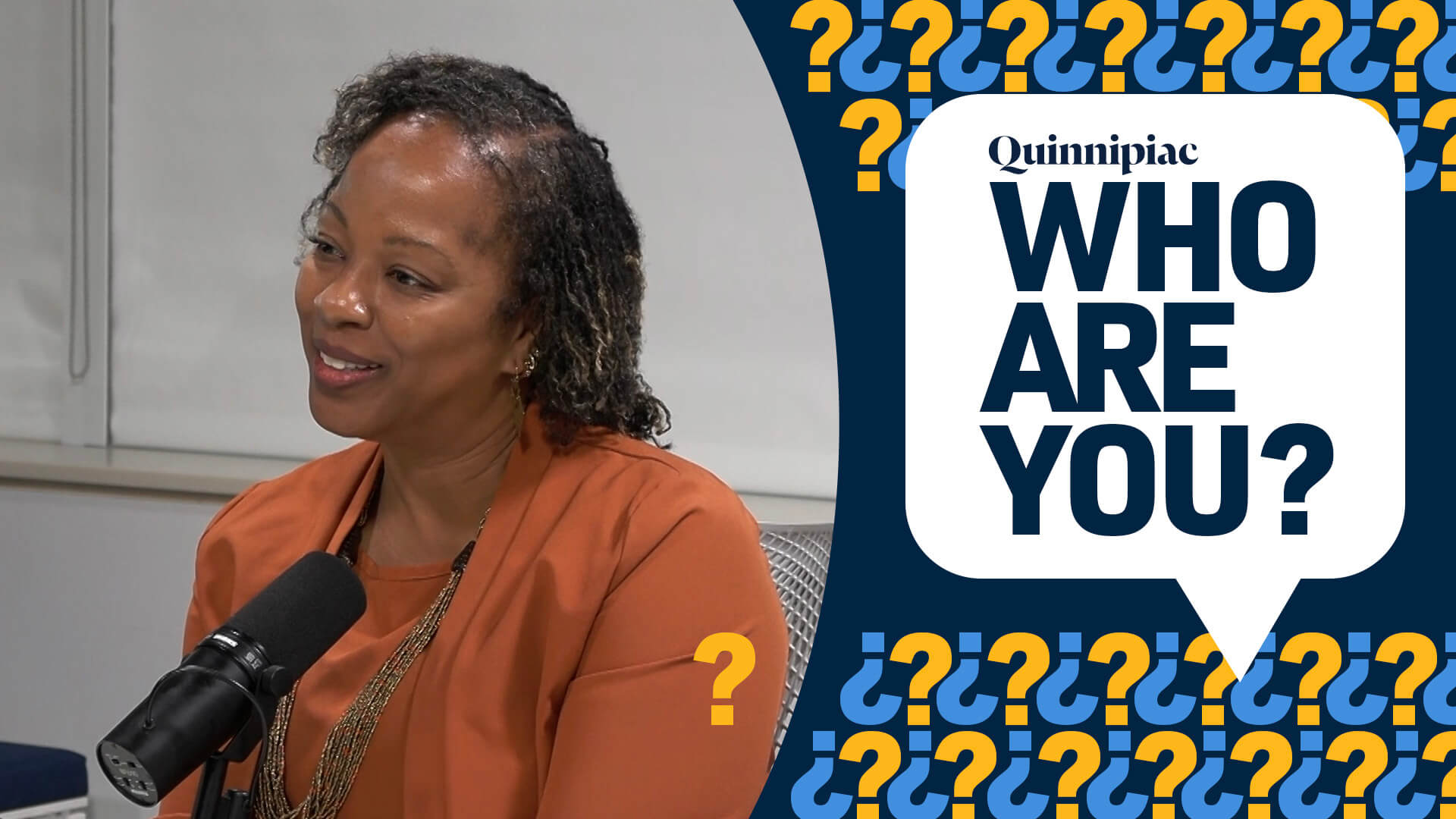
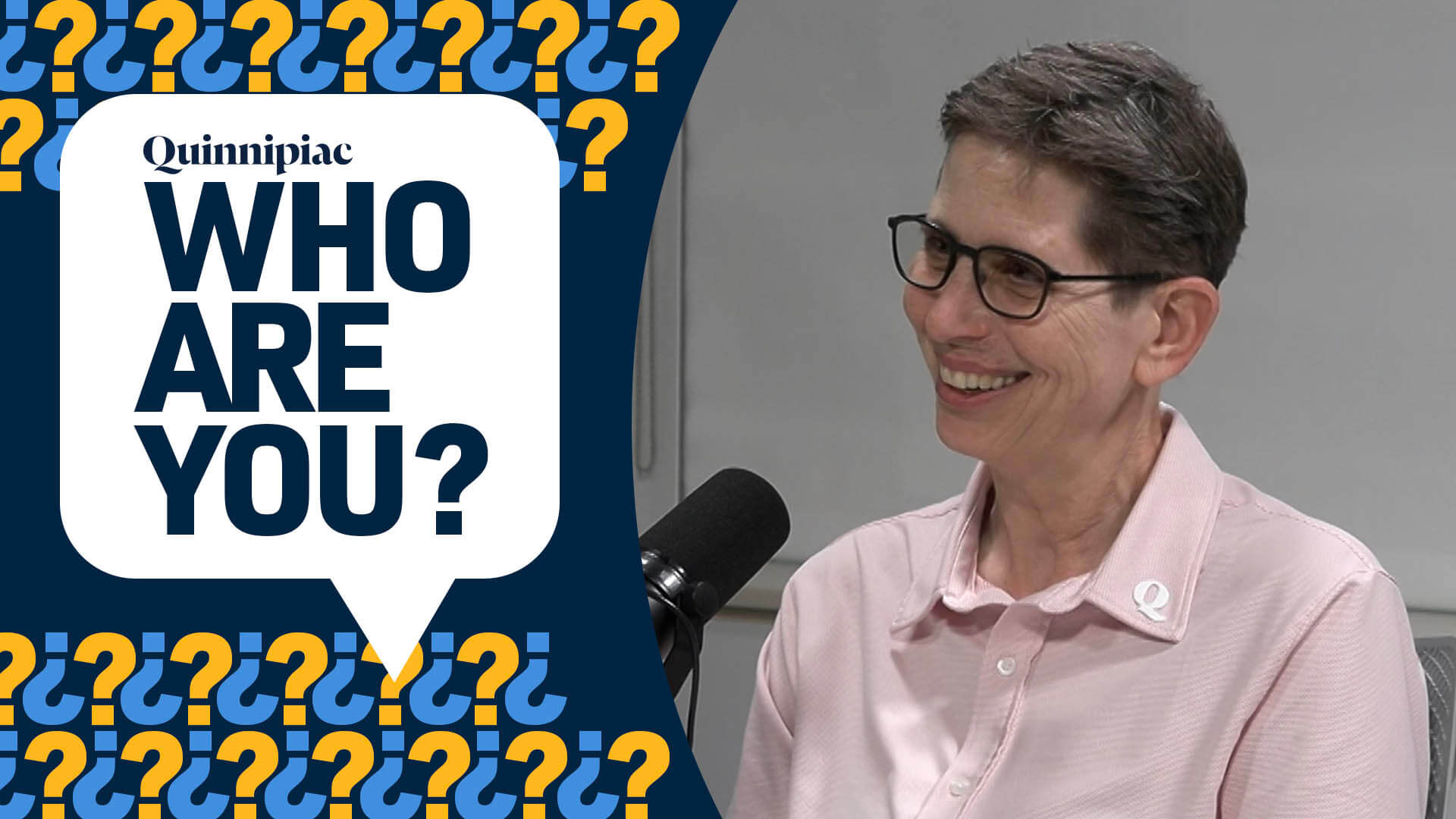
‘Who Are You?’ podcast with guest Professor David Kocik
Exploring video games through Media Studies
Exploring video games through Media Studies
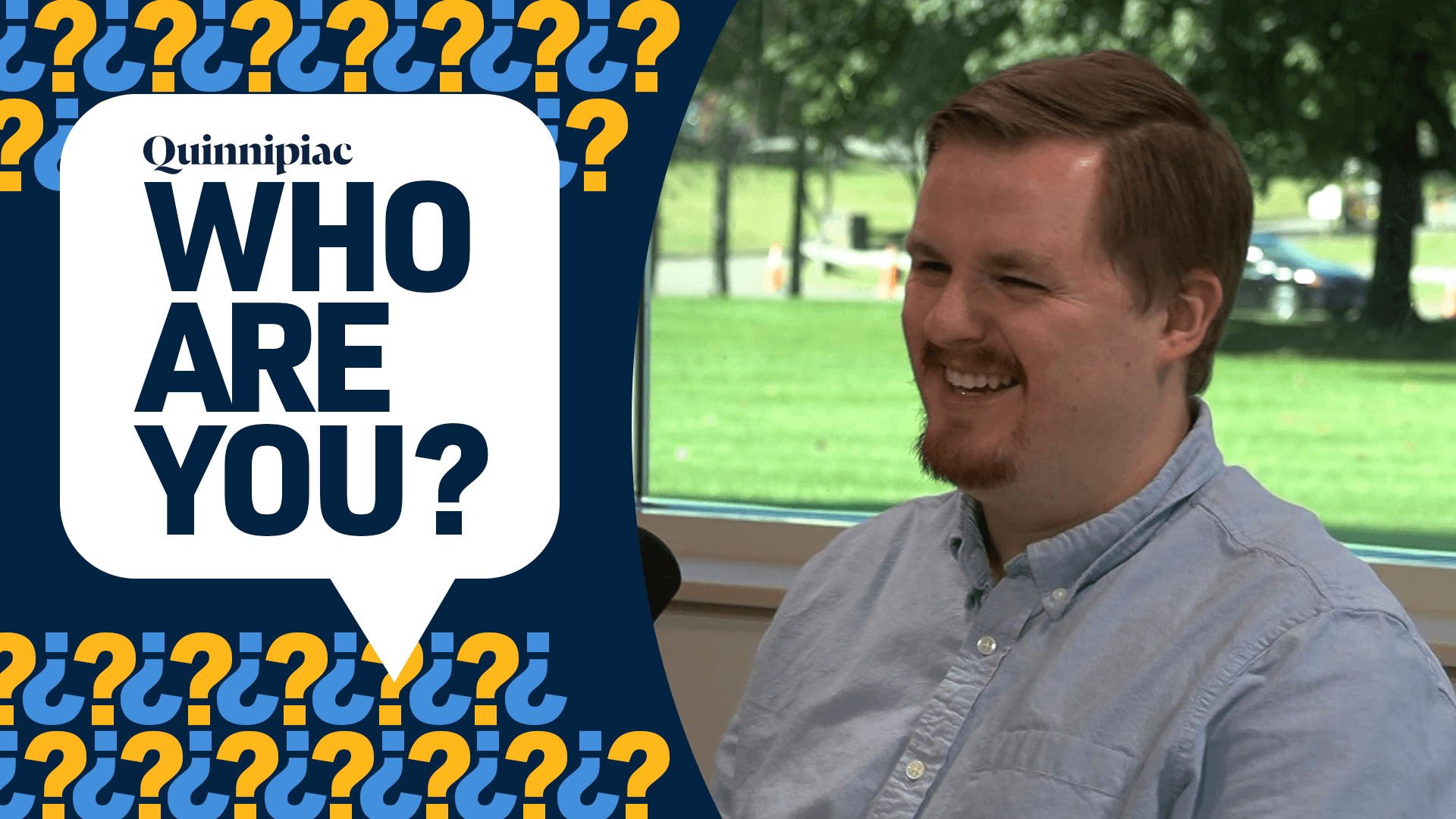
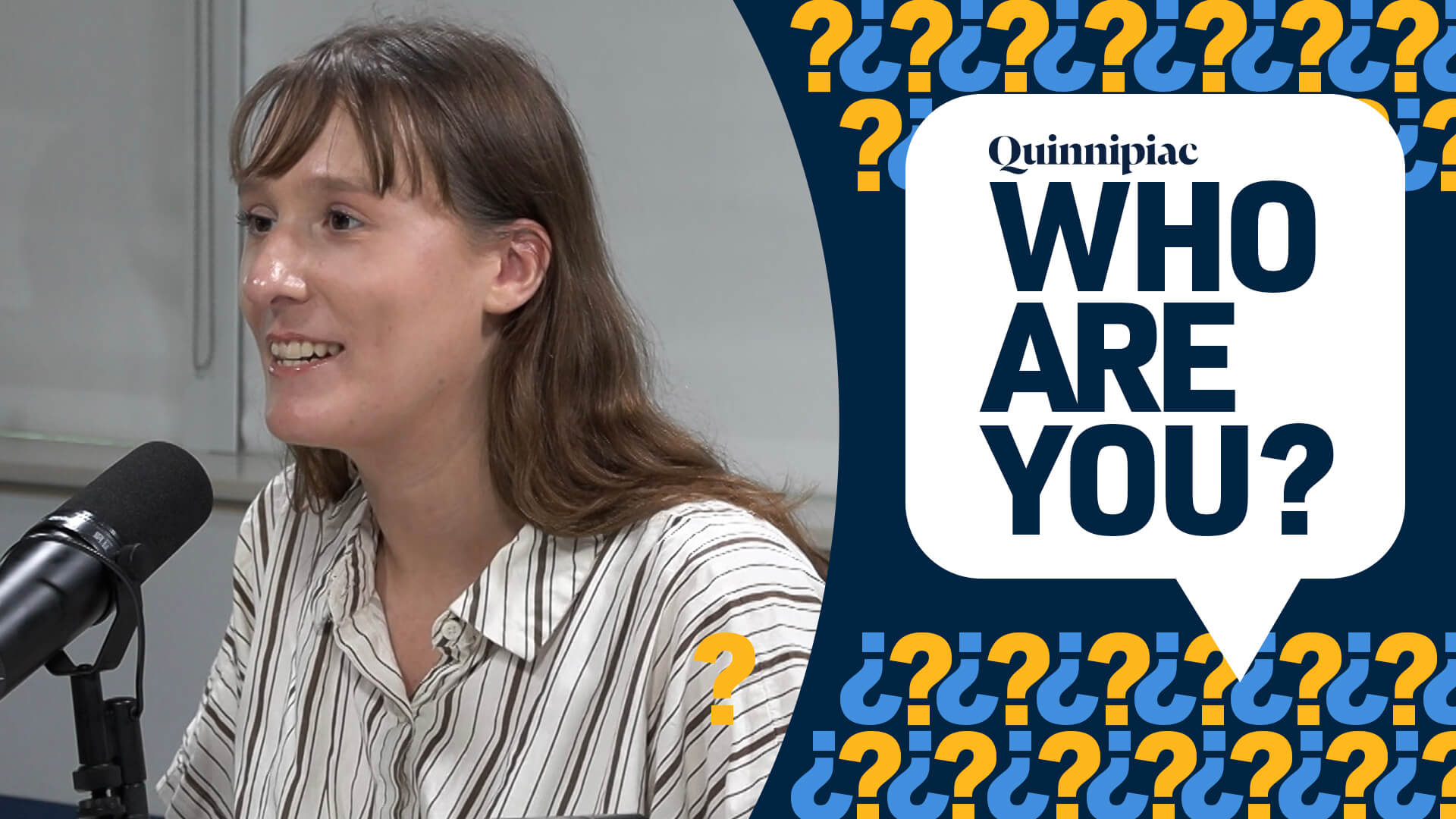
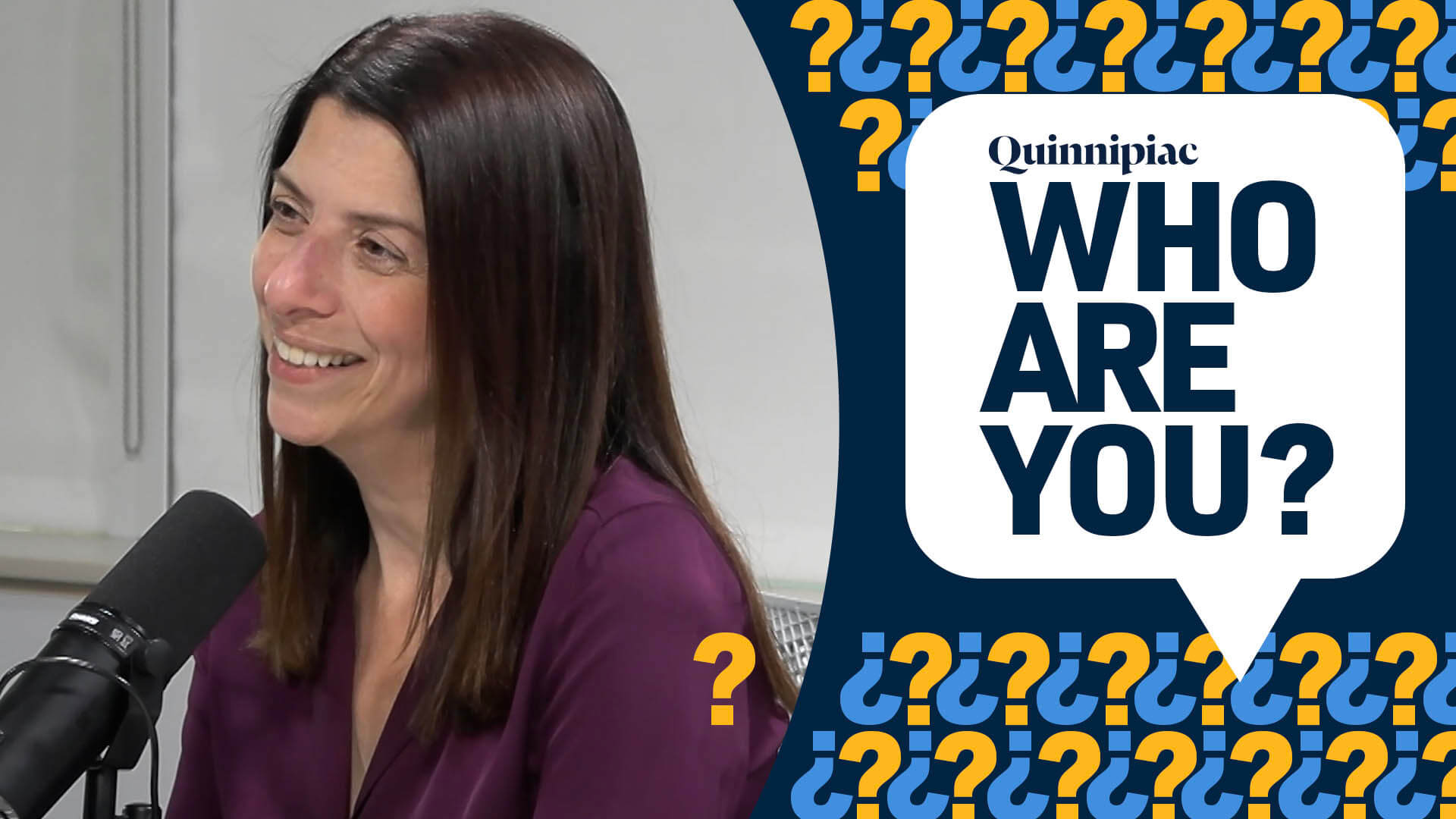
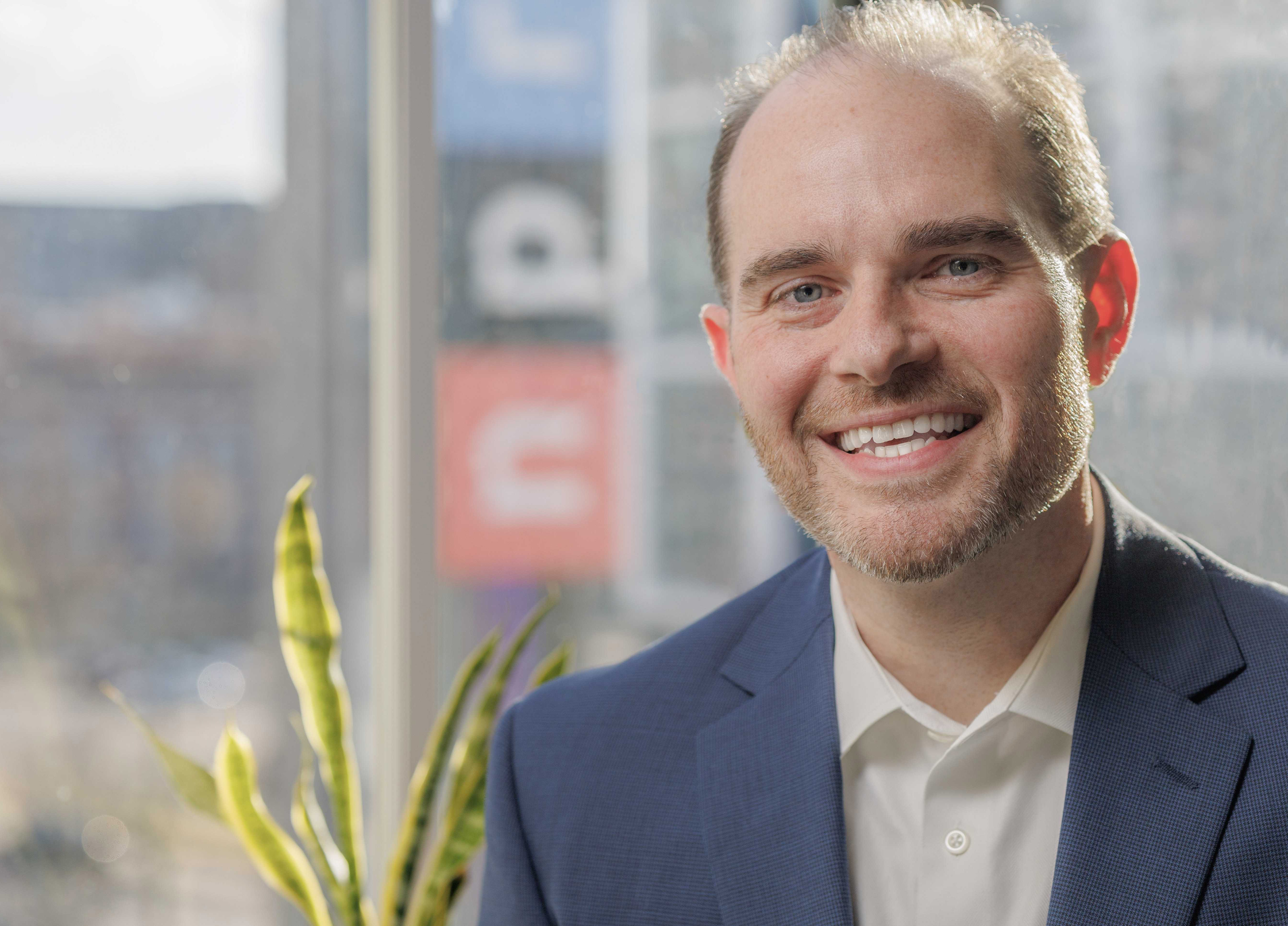
Joel: Hello, and welcome to ”Who Are You?,” the bobcats you know, the stories you don't. I'm your host Joel Vanner inside the podcast studio at Quinnipiac University School of Communications, and I'm joined today by my guest, David Kuchik. David, welcome to the show.
David: Hi, thank you for having me. Excited.
Joel: It's great to have you on the show.
David: Yeah.
Joel: We have a connection with media studies, which we'll get into later on in the show.
David: Yeah.
Joel: But I ask my guests the same first question, David, and that is: Who are you?
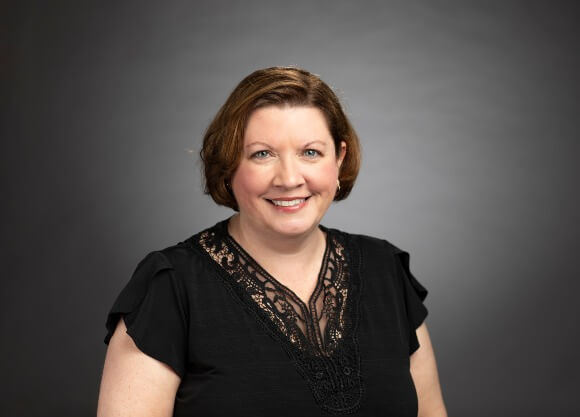
David: So, I'm David Kuchik. I'm a professor of media studies and assistant professor of media studies here at Quinnipiac. I'm in my second year here, and I'm loving it so far. I love to talk about all kinds of media with students. I also have two cats, Apollo and Birdie, so I love them as well. And I'm also huge into video games, and I enjoy playing music as well. I just had rehearsal last night with the civic orchestra in the region. So I do a little bit everything.
Joel: Multifaceted. And you mentioned your second year here at Quinnipiac. And we'll get into what media studies means a little bit later in the show. It's vague and encompasses a lot. Right. But, David, let's first start with David growing up. Where are we? And what are we interested in?
David: So we are 1,000 miles away from here in Hudson, Wisconsin. So I grew up right on the border between Wisconsin and Minnesota. And young David was watching his oldest sister play video games.
Joel: And you have three sisters, yeah. My oldest sister, especially, was big into them. Um, and we had this little, like, piano room, and it was also our TV room in the basement. And my sister loved to play all, like, Nintendo kind of games. So like Legend of Zelda, Mario, that kind of stuff. I was really enamored with a video game the remakes coming out in a month, and I'm very excited, called The Legend of Zelda Ocarina of Time. It was a huge game that impacted me. It's like, currently the best rated game of all time. Oh, wow, ever. I know very little about video games. So it's kind of it's like saying, like, my first movie was Citizen Kane right or my first movie was like Jaws, right? Like, the biggest, most popular, like, well rated. So I was very lucky. But the game, I mean, obviously, it's in the title, but Ocarina of Time is really, like a music focused game. There's a lot of music in it. So it really also started my passion for not only video games, but also playing music. So I started playing piano, basically, like from 6 years old onward. Did you listen to songs and video games and then try to play them on
David: Oh, sure. And then once we got high-speed internet and printers, then I'm printing out the sheet music that people write, you know, people write, you know, arrangements of them online. I'm printing them out. I had this huge binder with all the little plastic sheets in it where I would put all the music and everything. So I was a super huge nerd even back then.
Joel: So we have video games, we have music, your three older sisters, learning from them. Where were your interests? So going into junior high school and high school, kind of what were you centering around is like, I'm David, and this is what I'm interested in maybe doing for the next five years of my life or however long that may be. Yeah.
David: So when I got to middle school, junior high, I was a super huge band kid. Like, the stereotypes are all true of percussionists. I was a percussionist, and then I eventually was on drum line and marching band, and I stopped at the baritone after two years. I couldn't do it anymore. I always loved, like, any side of playing music. I just find it to be super Like, in my life, obviously, as a professor, we do a lot of analysis and a lot of, like, critical thinking in that realm. And I always loved in music, having the ability to kind of flex a different muscle, right? The creative muscle was always huge for me growing up. And then in classes in terms of, like, other kinds of school, and it was what I was interested in, Um, I was interested in a lot of, like, the English and kind of the social studies kinds of courses because I was really interested in understanding kind of, like, the media around me. And that was kind of the closest realm of school. Right, that you could do in junior in, like, middle school and high school. So I found myself a lot of times, like, thinking through the kinds of stuff we would learn about in, like, an English class. And then I would think of, like, in my life outside of school, I'd be like, Here's how I see, like, a similar theme, right, happening in a game I'm playing, right? Or, like, we talk about, like, written metaphors in, like, poetry, and then it's like, how's a visual metaphor, right, happening in games I'm interested in. And I kind of like, started doing that without really realizing that's what I was doing. It was more just like, Oh, this is something cool we're doing in school. I kind of, like, recognize it as something similar. When I was in high school, I never really thought there was something beyond that. Like, in terms of going into a major in college, right? I was like, Oh, I like music. I like English. So I know I wanted to be a teacher. So I'm thinking, Okay, I will just continue doing what I already enjoy. And I didn't realize that there were other ways to use those same skills, right, in other fields or other areas of study.
Joel: So going off to college, finding those areas, probably going into a teaching program, what was your experience like in that program? And what did you kind of learn about your areas of interest and how they might come together?
David: Yeah, I started out as a music education major, actually. I just enjoyed playing music so much, and I thought, This is kind of the realm I want to stay in. So I went to kind of a smaller state school in Wisconsin, and I just kept doing music. And then I realized after about the first year that I really missed doing some of the more, like, Englishy kind of stuff, right, analysis, talking about, like, history and how it's related to how we understand the media around us.
Joel: Which is a course that you teach. Which is going to be exciting, which we'll get into later.
David: So and I was about to become a mentor in the writing center. Somebody had approached me from the English department was like, we think you'd be great at this. And so that's when I kind of made the switch my first year. I switched my major, which I never thought I would do. I thought it was, like, taboo, right? And working with students now, I feel like there's a similar vibe of, like, Oh, my gosh, I failed because I'm switching my major.
Joel: Well, it's hard to do decide what you want to do for the rest of your life when you're 16, 17, and maybe don't know of the opportunities that college presents to you, you get there.
David: Yeah, absolutely. So I ended up going into the English program, and I kept my education part. So I wanted to be a teacher that for sure I knew was what I wanted to do. So I went into the English program. And what was really excellent about my experience was that I had teachers who let me analyze media within that program. So in my introductory courses, I'd be able to take those kind of lenses or however we want to analyze a text, and I was able to apply them to video games or films I was interested in at the time. And that really then inspired me to think about how, as a matter of what kind of teacher I was, how I could incorporate the media aspect of eventually what would become media studies in my life, right to the work I was doing. And that was something I did not think I could do, right? But I was able to do that. And I that's part of what I love about teaching is helping students realize they can also, you know, take their interests and apply it to what we're talking about in class.
Joel: And unlock their passions and could inform your perspective, too, right?
David: Exactly. So, following college, you taught high school for a year. Yes. Which was an interesting experience. Tell us kind of what you learned from that and then how that kind of brought you back to learning. I cannot believe I taught high school when I was 22 years old. That was almost ten years ago at this point, which is wild. It was a birth by fire. Kind of event where you just have to go and pray that everything, you know, the wheels don't fall off the car by the time you get to the end. I kind of knew. So I did student teaching as part of my degree program, and I kind of knew I'm like, Okay, I like this, but I probably want to go to the college level. But I thought, Let me try it, you know, at high school for a year, just so I get, like, the real feel of what, like, a full year of teaching looks like. And after three months, I'm like, Yeah, I want to teach it.
Joel: You got the full experience after three months. Yeah. Well, and I love working with students, but I'm just like I kind of want to go up to the college level, which I kind of had the instinct and so it confirmed that when I was teaching. So, what was your journey to teaching at the college level like? I think, you know, I may know a little bit, but I don't know if our listeners know kind of how is a professor born, right? Like, what is the path? How does this person come in front of me in a class and have the experience to teach me the subject? What was your path like?
David: Well, I like a lot of students, I started with Google. Uh I started with searching online for careers in media, professors who had done media studies before, or professors who had researched similar things that I was interested in. And then I figured out, like, Okay, where did they apply to school? Where should I go from there? I think a lot of students probably relate to that. They're like, I want this goal. Where do I go to get there?
Joel: Yeah.
David: And so I took the school I ended up going to actually, I didn't have on my radar, but I ended up taking this exam, and then the school had reached out to me and they're like, Hey, you said you were interested in media studies. Do you want to come down and just, like, take a tour and see what it is. And so I did. And I was really impressed. So I went to another state school, and then I got my master's there in media studies, and then I got my PhD there in media studies. So I just kind of kept going. It was great to be in an environment now where we are talking about similar things. That you would discuss in an English classroom, but really thinking about it in the media environment. So I learned a lot about different ways you could analyze media, different ways you can analyze or research audiences and all these different things that I was always really interested in it's like, This is finally the program where I'm like, it's all gelling together with what I want
Joel: and there were some areas of research that you did throughout your program that you kind of narrowed in on that you are launching a course related to here here at Quinnipiac. What were your areas of research before we get to the experience here at Quinnipiac?
David: So I was researching video games more and more. And I was pretty I was in a good spot because the study of video games is relatively newer in any kind of, like, higher ed context. It's really only had been happening, like, kind of at a consistent level for, like, the past ten years.
Joel: We, we grew up thinking video games are bad.
David: Yeah, yeah, a lot of the research was just do video games like make people do bad things, right? And now it's a lot more nuanced than that. And so I started researching video games. I was really interested in kind of going back to my childhood. I was really interested in Japanese video games and how they came to the US because at the same time, fandoms of video games, of Japanese media, right, just in general, is kind of growing and growing in the US over time. So I was really interested in how we understand, like, what that transnational context means. Like, what does it mean? Like, how does playing Legend of Zelda help me see or help me think of, like, what Japan means? Right, there are cultural differences among
Joel: Yeah, so it's like, what's that translation process like? What kind of strategic decisions do companies that engage in that translation work? How do they think of their audiences? And how do they change things, right? Because obviously, there's so much in the Japanese context that whether it's religion or history, right, that's so different from the history of the US that I think it's like this really interesting place where cultures are kind of like coming together and trying to figure out, like, how do we balance it so everybody kind of understands each other while also keeping our own, like, identities and history intact. And I think that's a lot of media right now, right? A lot of international media is spreading KPop Demon Hunters, right? It's another example. Right, right, from East Asia. And looking at that critically and trying to understand it more from just what you see on the surface level. So fast forward to here at Quinnipiac, you teach in our media studies, communications program in the School of Communications, which I am an alum of, and I think it's incredible. Awesome. But for those that are listening who don't know a lot about what is media studies? Because I did say it's kind of general and all encompassing, what is the program here at Quinnipiac and who is it geared towards?
David: Yeah. Media Studies is great for understanding media, not just within one industry or field, but kind of as a whole, right? So thinking about how media, especially right now, especially, like, obviously, social media is really big. So we had just released—we had just put together a content creation minor as an example of other work we do. But a lot of it is understanding media audiences, like media texts. Like, how do you even understand how to figure out media messages beyond just like the surface of, like, Oh, this is a summary of the movie, right? But how do you actually understand and analyze it underneath the surface? Basically, it allows you to customize what you're interested in. So the Media Studies department gives you kind of the tools to understanding the different sides of the media industries. But then, if say, you're interested in the video game environment, right? Maybe you're not creating games, but you're interested working in the industry, working in event production, right? You're able to kind of learn the building blocks of understanding these media industries and understanding the messages that get sent out. But the coursework is flexible enough to where you can apply those ideas and those concepts to whatever you're interested in in a media environment, which is great for me as a video game researcher, because I'm able to add in my area of research to the Media Studies department really easily. And I just know in talking with students that that's a growing area, right? It's a growing industry, billions of dollars worldwide, that a lot of students are interested in getting in, not necessarily through creating them, but through, you know, other avenues of engaging with the industry.
Joel: And you mentioned the content creation minor that's in the Media Studies department that was just created. And then there are also courses on artificial intelligence and other opportunities within the media studies curriculum that are growing and changing with the communications climate and just the world we live in today. So you'll get that today exposure and experience for your careers when you graduate.
David: Yeah, for sure. In the AI class that I'm teaching, I kind of became the head, kind of instructor of that. I have really with that class, I have really tried to customize, again, that idea of customization is huge. With projects that students do in that class is, they really research how AI is impacting their industry. So over the course of the semester, we talk about updated rules, updated capabilities of these platforms. It's hard to keep up with these platforms, right? And then at the end, students kind of take everything we've talked about, and they're like, Okay, I'm planning on getting a job in this field, right? I'm going to take all the key terms that we've talked about, and I'm going to do research and how are people talking about it within my industry. And I think that's really helpful, and I think that's a good symbol of, like, the media studies kind of ethos where it's like, we give you the skills, now go to your context and see how it's impacting what you're interested.
Joel: Mentioned your areas of interest and your ability to this spring teach a course related to video games and media studies. Tell us what the course is and some of the experiences that students will get as part of the course.
David: Yeah. So I'm very excited. It's the first video game-specific course in our program. It's called Press Start: Video Game Communities and Industries. Got to have that snazzy title.
Joel: I like it.
David: And the course is really designed around three things. So first, getting a basic understanding of the terminology we use to describe and analyze games, cause a lot of people are interested in it, but they've come at video games from so many different avenues, right? Mobile games, playing on their PC.
Joel: Sure.
David: You know, um, I just even passively watching somebody play audio.
Joel: Yeah. So giving a basic framework of, like, how do we talk about sound? How do we talk about, you know, level design? How do we talk about 3D versus 2D, right? So we start with that, and then we'll get into the communities that are involved in video games. So we start talking about audiences, right, international audiences, versus indie audiences, right, versus US audiences, and getting into the specifics there and also understanding representations in games and how things have changed over time. And then the final part of the course, which I'm also really excited about is we dig into the industry itself. So we talk about the current context of indie production and how that's different from the current context of AAA production. And again, as a global industry, there's lots of different spaces where it's occurring. So we get to do a nice survey of all of the different industries and it's really exciting is we have a grant this year to take students to the PAX East gaming convention in Boston at the end of April, and we're going to have students directly network with and talk to people within the industry. Again, kind of tailored around what their interest is. So if they're interested in event production of something like a PAX East, they could talk to those specific people, whereas maybe they're more interested in creating games or maybe they're more interested in repping for teams, right, and being producers for esports events. It gives them a really great opportunity to actually see how is the backside of the industry is actually functioning and operating, which a lot of them are interested in, but they just don't have any exposure to. And throughout everything you're saying, David, it's the option of students to kind of choose their own adventure, through media studies. But throughout it, the media studies faculty, which are awesome, are there to guide you and advise you through the program, right, so that it's not choose your own adventure and find your own way through the adventure, right? It's choose your own adventure and we'll help you along the way to get there.
David: Yeah, absolutely. And that's in every single class we do.
Joel: Sure. Especially when you get to the upper levels, there's so much work you do that's um about creating, like, building your portfolios, right, building your connections with other people within the industries that you're interested in, doing kind of professional level research that you might do when you're working for, say, you know, the media operations of a company. And those are all again, really, really fantastic, like, groundwork and, like, the framing of how to do all those things. But then you take what we give you, and then you build on top of that, right, what you're interested in, with our support along the way. It's just fantastic. What advice would you give a student who is interested in media studies. They're not sure if it's the space for them, but they want to give it a try. What would you say to them?
David: What I would say is come talk to me. I advise all the freshmen, so you'll be great. But seriously, reach out to any of the professors first. I would also say, if you're interested in understanding media and maybe you're not exactly sure how you want to do it yet, Media studies gives you exposure to a lot of different ways of engaging with media, producing media, working with social media or kind of creating podcasts or audio. I think what's great about the Media Studies program is that us professors are always willing to work with you to bring in what you're interested in. So whatever aspect of media you're interested in, you can always bring that to our classes. And I think students often get nervous about bringing their own interests into the classroom because they feel like that's the professor. They know everything, and you're here just to take it all in.
Joel: That we want that. Yeah. And media studies is a great place to foster that and to really build on what you're already interested in. So if you're interested in media at all, this is a great major. But also a minor, right? The content creation minor is an example where you can you know, maybe you have a major in another field, but you can build on that by bringing in some of those media skills that are useful across most every single industry these days. I mean, nowadays, no matter what field you're in, maybe you need to market yourself or go on social media, you need to, you know, learn those ins and outs and learn about it in college where you can experiment and join student clubs and organizations and flex those muscles and graduate with a portfolio of things that maybe connected to your other area, if it's not media studies, right?
David: Yeah, absolutely. Absolutely.
Joel: Well, David, thank you so much for joining me on the show today. It was great having you on and hearing about your upcoming video game course. Sounds awesome.
David: Okay, thank you so much.
Joel: If you enjoy today's episode, be sure to subscribe and share and find other episodes on Apple, Spotify, and YouTube. Until next time when I ask my next guest, who are you? I'm Joel Vanner. Bye for now.






Quinnipiac Today is your source for what's happening throughout #BobcatNation. Sign up for our weekly email newsletter to be among the first to know about news, events and members of our Bobcat family who are making a positive difference in our world.
Sign Up Now